
Cuidá tu filoProtect your edge
Un filo bien cuidado dura mucho más entre afilados. Con unos pocos hábitos, tus cuchillos y herramientas cortan mejor por más tiempo.A well-cared-for edge lasts much longer between sharpenings. A few simple habits keep your knives and tools cutting better, for longer.
En la cocinaIn the kitchen
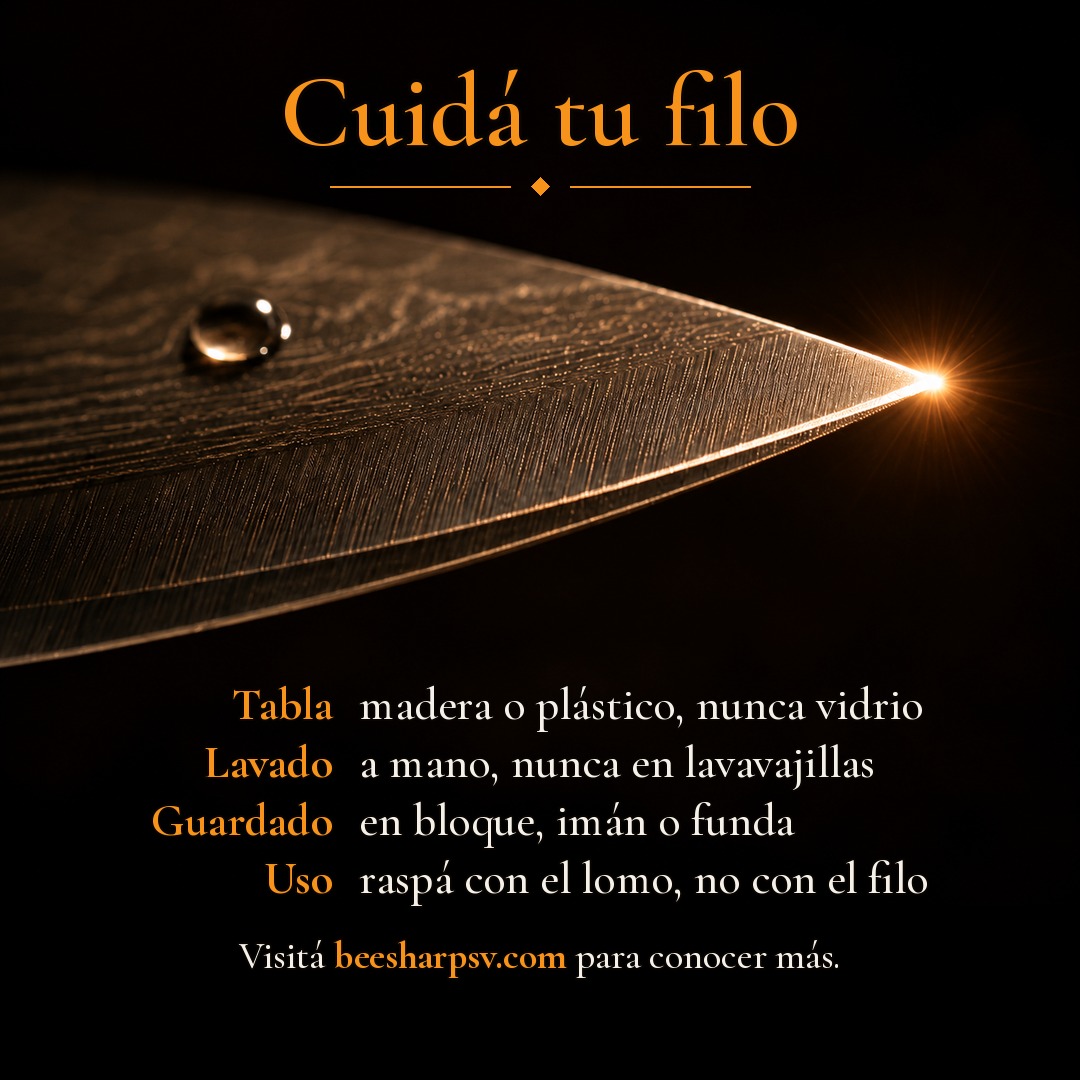
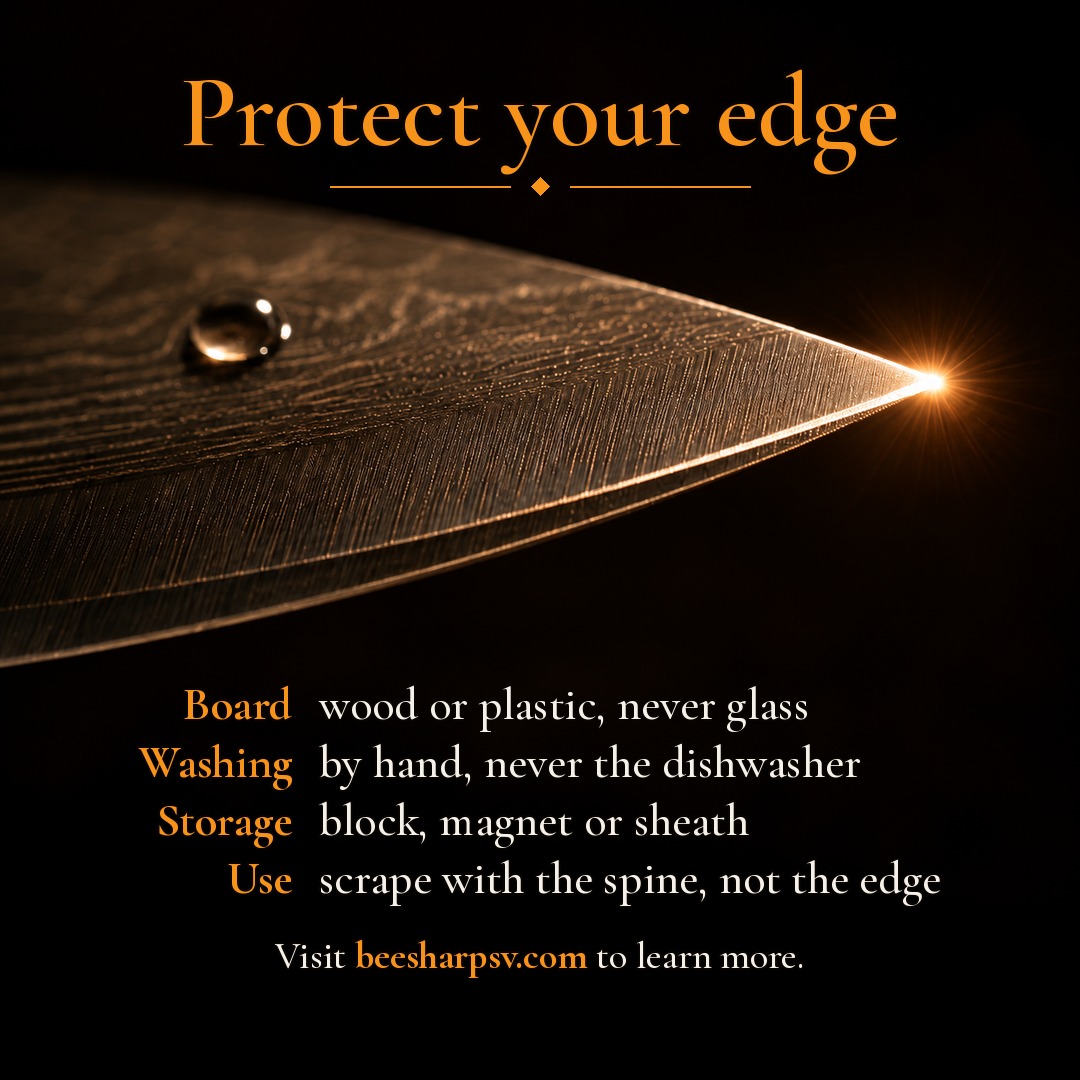
- TablaUsá tabla de madera o de plástico. Nunca cortés sobre vidrio, mármol ni cerámica: son más duros que el acero y doblan el filo en pocos cortes.BoardUse a wooden or plastic board. Never cut on glass, marble or ceramic: they are harder than steel and roll the edge in just a few cuts.
- LavadoLavalo a mano con agua y jabón, y secalo enseguida. Nunca en el lavavajillas: el calor, el detergente y los golpes contra los trastes arruinan el filo.WashingWash it by hand with soap and water, and dry it right away. Never in the dishwasher: the heat, the detergent and knocking against other dishes ruin the edge.
- GuardadoGuardalo en un bloque, en una barra magnética o con su funda. Suelto en la gaveta se golpea con todo y pierde el filo.StorageKeep it in a knife block, on a magnetic strip or in a sheath. Loose in a drawer it knocks against everything and loses its edge.
- UsoPara pasar la comida de la tabla a la olla, raspá con el lomo del cuchillo, no con el filo. Arrastrar el filo de lado lo dobla sin que te des cuenta.UseTo move food off the board, scrape with the spine of the knife, not the edge. Dragging the edge sideways bends it without you noticing.
En el jardín y el campoIn the garden and field
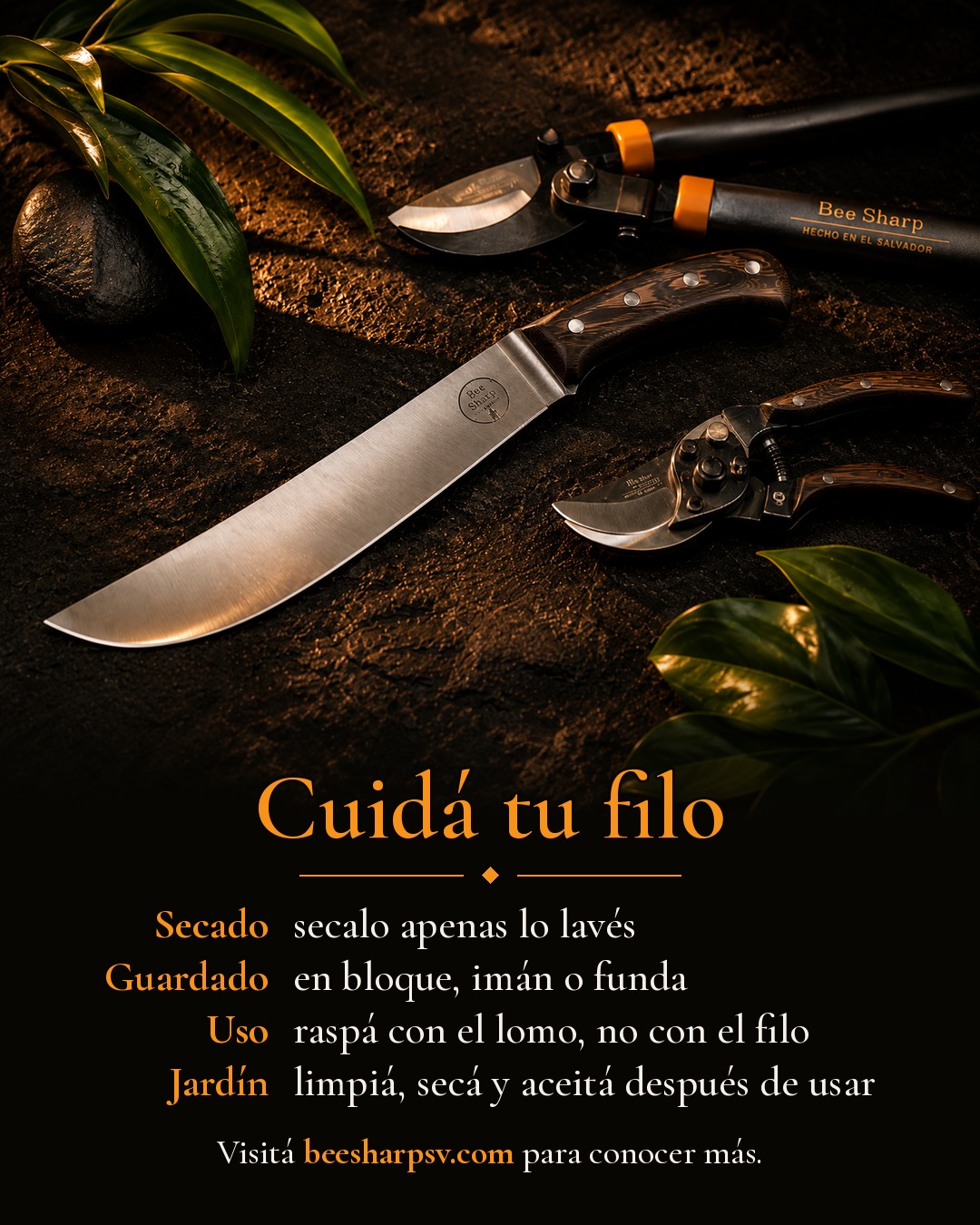
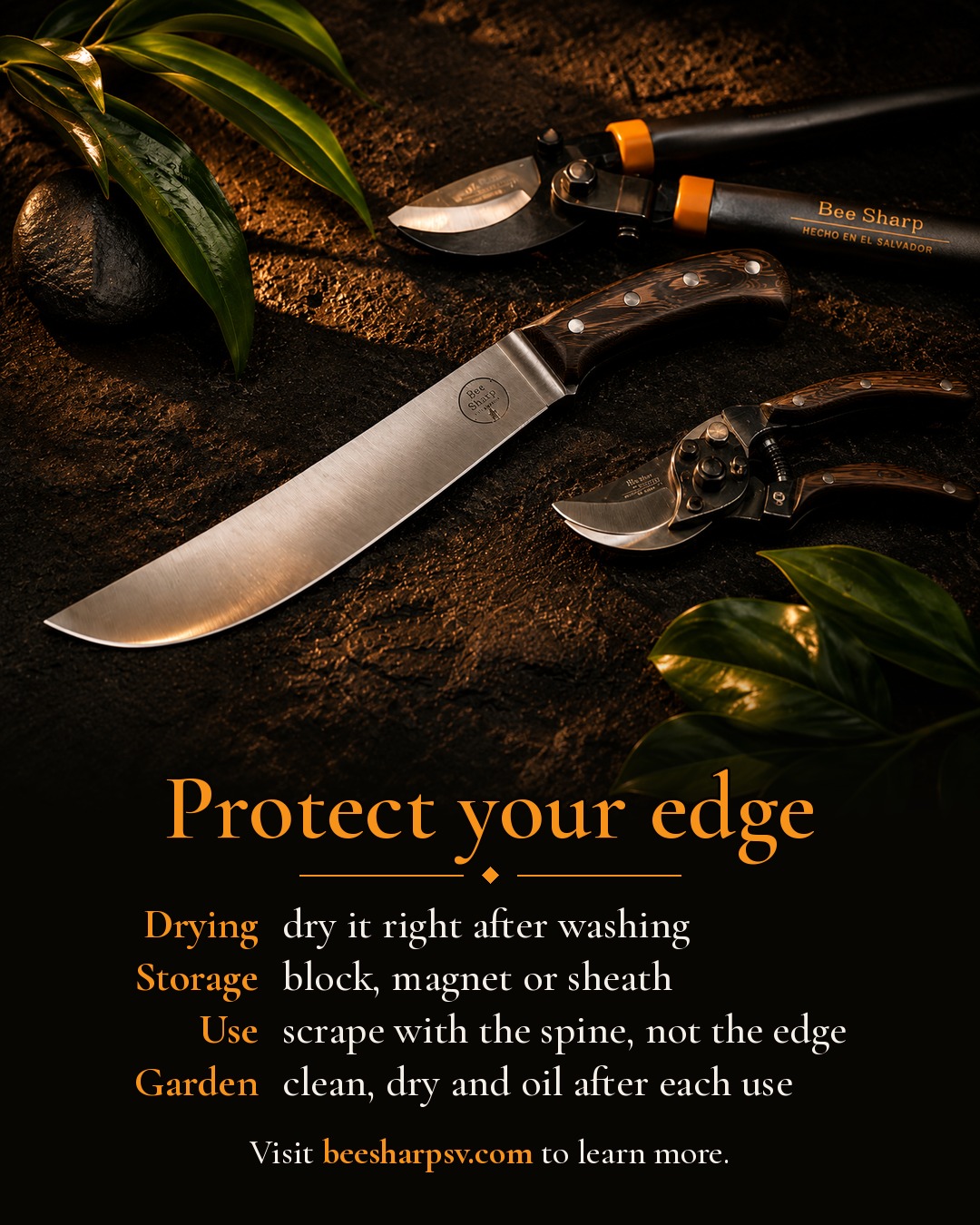
- SecadoSecalo apenas lo lavés o después de trabajar con el monte mojado. La humedad trae óxido, y el óxido se come el filo.DryingDry it as soon as you wash it, or after working in wet brush. Moisture brings rust, and rust eats the edge.
- GuardadoGuardalo seco y con su funda, colgado o en un lugar donde no se golpee con otras herramientas.StorageStore it dry and in its sheath, hung up or somewhere it won't knock against other tools.
- UsoCortá con cada herramienta lo que le toca: machete para el monte, tijera de podar para ramas verdes, hacha para la leña. No hagás palanca ni le pegués a piedras o alambre.UseCut what each tool is made for: a machete for brush, pruning shears for green branches, an axe for firewood. Don't pry with it, and keep it away from stones and wire.
- AceiteDespués de cada uso, limpiá, secá y aceitá la hoja con una capa delgada. Así llega sin óxido y lista para el próximo trabajo.OilAfter each use, clean, dry and oil the blade with a thin coat. That way it stays rust-free and ready for the next job.
¿Cuándo afilar?When to sharpen?
Tu herramienta te avisa cuando ya necesita afilado:Your tool tells you when it needs sharpening:
- Aplasta el tomate en vez de rebanarlo.It crushes the tomato instead of slicing it.
- Resbala sobre la cáscara de la cebolla.It slips on the onion skin.
- El machete rebota en vez de entrar.The machete bounces instead of biting in.
- La tijera de podar mastica la rama en vez de cortarla.The pruning shears chew the branch instead of cutting it.
¿Te suena alguna? Es hora de afilar. Traela y nosotros nos encargamos.Sound familiar? It's time to sharpen. Bring it to us and we'll take care of it.
Pedí tu afiladoBook a sharpeningbeesharpsv.com